
"tree can"
30000 article(s) found

Correctly planting Coffee Tree Coffee Tree growth process Map
One of the characteristics of a coffee tree is that its fruit can bear fruit several times a year, and another is that flowers and fruits coexist at different stages of ripening. If the fruit is too ripe, the beans in it will rot. If the beans are not ripe, the beans will not ripen by themselves. So bean pickers often go through the same tree several times to find ripe fruit, but try their best.
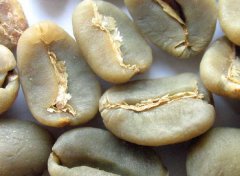
Coffee tree species
Coffee species Coffee trees can be divided into two main varieties: Arabica (Arabica) and Robusta (Robusta). There are also some minor species, such as the Liberian species (Liberica) and the Alabasta species (Arabusta), but they are rare on the market. Although Arabica and Roberta are widely cultivated, there are significant differences between them.

The morphological characteristics of coffee trees the geographical distribution of coffee trees
Coffee fruit Coffee Tree is a shrub or small tree of Rubiaceae; the leaves are opposite, leathery and long ovate; every March, the branches appear white flowers, petals spirally arranged, and the heart jumps around the petals. Take a closer look, it is really like a small windmill playing in childhood, emitting the fragrance of jasmine flowers; the fruit is oval, berry, crimson, hidden two

How many years does it take for a coffee tree in Yunnan from planting to fruiting? how much can a coffee tree produce in a year?
How many years does it take for a coffee tree from planting to fruiting-the first flowering period of a coffee tree is about three years old, with white five-petal tube-shaped flowers and a faint scent of jasmine. The inflorescences are dense and arranged in clusters. Flowers wither after two or three days of blooming and begin to bear fruit after a few months. The fruit is a drupe, about 1.5% in diameter.

Let's talk about the problem of shading trees with coffee.
Coffee planting, with certain shade trees, can improve the quality of coffee, which is internationally recognized. Not only that, keep the coffee garden with a certain degree of concealment, and we recommend that the degree of concealment be controlled at about 30%. Can always make the coffee garden in a good ecological environment (especially shaded trees can maintain the diversity of tree species), so as to reduce the occurrence of coffee diseases and insect pests.

Cultivation techniques of Coffee Tree Seedling Propagation and Establishment of Coffee Garden
(1) Seedling propagation Coffee seedling propagation can be divided into seed propagation and asexual reproduction. 1. Seed propagation (1) seed collection, seed washing and seed storage during the full ripening period of coffee (the full ripening period of medium-grain coffee in Hainan Island is from February to March, and that of small seed is from September to November). The fully ripe fruits are picked from strong and high-yielding mother trees to make seeds. After the fruit is harvested, peel and wash the seeds immediately. The method is to remove the fruit.
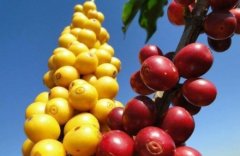
Coffee tree common sense Coffee tree origin in Ethiopia
The coffee tree is native to Ethiopia in Africa. Coffee tree in botany, belongs to the Rubiaceae coffee subgenus evergreen tree, and generally known as coffee beans, in fact, coffee tree fruit seeds, only because of the shape like beans, so called coffee beans. Climate is the decisive factor for coffee cultivation. Coffee trees are only suitable for growing in the tropics or subtropics, so latitude 25 degrees north and south.

Planting conditions of Coffee trees
The origin of the coffee tree is Ethiopia in Africa. In botany, coffee trees belong to the evergreen trees of the subgenus Rubiaceae, and coffee beans, commonly known as coffee beans, are actually the seeds of the fruit of coffee trees. They are called coffee beans only because they are shaped like beans. Climate is the decisive factor for coffee cultivation. Coffee trees are only suitable for growing in the tropics or subtropics, so latitude 25 degrees south and north.

Knowledge of coffee trees about planting and picking coffee trees
One of the characteristics of a coffee tree is that its fruit can bear fruit several times a year, and another is that flowers and fruits coexist at different stages of ripening. If the fruit is too ripe, the beans in it will rot. If the beans are not ripe, the beans will not ripen by themselves. So bean pickers often go through the same tree several times to find ripe fruit, but try their best.
Boutique Coffee Science explains in detail the knowledge about coffee trees
Coffee trees are evergreen shrubs or trees belonging to the Rubiaceae family. Wild coffee trees can grow to a height of 5 to 10 meters, but coffee trees planted in the manor are often cut to a height of less than 2 meters in order to increase fruit and facilitate harvesting. The opposite leaf of the coffee tree is long oval, the leaf surface is smooth, the end branch is very long, the branch is few, and the flower is white, opening at the base of the petiole connecting the branch.

Coffee tree growth habits, distribution Coffee tree planting knowledge
The coffee tree is native to Ethiopia in Africa. Coffee tree in botany, belongs to the Rubiaceae coffee subgenus evergreen tree, and generally known as coffee beans, in fact, coffee tree fruit seeds, only because of the shape like beans, so called coffee beans. Climate is the decisive factor for coffee cultivation. Coffee trees are only suitable for growing in the tropics or subtropics, so latitude 25 degrees north and south.

The basic knowledge of coffee beans the planting of coffee trees
Coffee tree coffee (Xoffea arabica Linn) coffee is a perennial evergreen shrub or small tree of Rubiaceae. It is a horticultural perennial cash crop with the characteristics of fast growth, high yield, high value and wide market. Wild coffee trees can grow to 5 to 10 meters high, but coffee trees planted on manors are often cut to less than 2 meters in order to increase fruit and facilitate harvesting.

The growing environment of coffee beans the planting conditions of coffee trees
Coffee tree coffee (Xoffea arabica Linn) coffee is a perennial evergreen shrub or small tree of Rubiaceae. It is a horticultural perennial cash crop with the characteristics of fast growth, high yield, high value and wide market. Wild coffee trees can grow to 5 to 10 meters high, but coffee trees planted on manors are often cut to less than 2 meters in order to increase fruit and facilitate harvesting.

Production conditions of Coffee trees Shijiazhuang Cafe
Fertilization was carried out in combination with plastic surgery within 1-2 days after planting. The fertilization of young coffee trees is mainly nitrogen fertilizer, while appropriate application of phosphorus and potassium fertilizer, in order to accelerate the formation of crown and promote the development of roots. Human and animal manure and green leaf retting fertilizer also have a good effect on the growth of young coffee trees. Coffee seedlings can be fertilized for the first time two months after planting, and then once every 1-2 months. Such as human and animal dung

Basic knowledge of high-quality coffee the planting conditions of coffee trees
Coffee tree coffee (Xoffea arabica Linn) coffee is a perennial evergreen shrub or small tree of Rubiaceae. It is a horticultural perennial cash crop with the characteristics of fast growth, high yield, high value and wide market. Wild coffee trees can grow to 5 to 10 meters high, but coffee trees planted on manors are often cut to less than 2 meters in order to increase fruit and facilitate harvesting.
Growth habits of Coffee trees
Coffee trees belong to the evergreen family of Akanaceae. They are tropical plants and are not cold-tolerant. Most of them are planted in areas with elevations of 300,400m, and also in highlands with elevations of 2000-2500 meters. But those who plant on slopes above 1500 meters above sea level have better quality.

Basic knowledge of high-quality coffee the planting conditions of coffee trees
Coffee tree coffee (Xoffea arabica Linn) coffee is a perennial evergreen shrub or small tree of Rubiaceae. It is a horticultural perennial cash crop with the characteristics of fast growth, high yield, high value and wide market. Wild coffee trees can grow to 5 to 10 meters high, but coffee trees planted on manors are often cut to less than 2 meters in order to increase fruit and facilitate harvesting.

The basic knowledge of Coffee planting the basic knowledge of Coffee trees
The origin of the coffee tree is Ethiopia in Africa. In botany, coffee trees belong to the long green trees of the subgenus Rubiaceae, and coffee beans, commonly known as coffee beans, are actually the seeds of the fruit of coffee trees, just because they are shaped like beans, so they are called coffee beans. Climate is the decisive factor for coffee cultivation. Coffee trees are only suitable for growing in the tropics or subtropics, so latitude 25 is south and north.

Coffee tree adoption activity launched in Pu'er Jinggu Ecological Coffee Garden
It is reported that after adopting the coffee tree, the adopter will receive a triple reward: after the coffee beans are picked every year, they can get the coffee beans of the corresponding output of the adoption tree, which can be customized into personalized coffee products according to their needs, and become a companion gift for visiting relatives and friends; every year, the coffee picking season can visit the local area and participate in the whole process of coffee from picking to finished product production; priority and preferential treatment can be given to the ecological farmers in the coffee farm.

What does Chinese coffee trees look like? where are coffee trees planted in Yunnan? environmental production areas manor treatment plants.
What does the Chinese coffee tree look like? where do the coffee trees grow in Yunnan? the manor processing plant introduced that the coffee fruit should be harvested immediately, and because the fruit of different ripening periods will appear on the same tree, it is not easy to harvest. Generally speaking, it takes as long as 4-5 months to receive a full harvest from the initial harvest. If ripe and immature fruits are harvested at the same time, the coffee will be reduced.